
Apple Silicon vs Intel: Fast Ways to Check Your Mac (2025 Guide)
If you want to quickly confirm whether your Mac uses Apple Silicon vs Intel, this guide walks you through the fastest and most accurate methods. Apple introduced its M-series chips in 2020, so knowing your processor now matters more than ever. As a result, you can choose compatible apps, avoid performance issues, and solve troubleshooting problems faster. In addition, this check helps developers, IT admins, and everyday users understand how their Mac handles software, virtualization, and updates.
Table of Contents
Why Knowing Your Mac’s Processor Matters
Different chip families behave differently with software, so the Apple Silicon vs Intel choice affects your daily work. Some apps are optimized for the M-series, while a subset still targets Intel only. Tools such as Parallels, Docker, and UTM also change features depending on CPU architecture. Therefore, understanding your hardware helps you select the right builds, avoid crashes, and plan upgrades with confidence. If you also want to reclaim disk space afterwards, you can later check our guide on clearing system storage on macOS.
Method 1: Use “About This Mac” (Fastest)
- Click the Apple menu () in the top-left corner.
- Select About This Mac.
- Under Overview, look for Chip (newer Macs) or Processor (older Macs).
If it shows “Apple M1”, “M2”, “M3”, or “M4”, you have an Apple Silicon Mac. If you see “Intel Core i5”, “i7”, or “i9”, then it is an Intel model. This method is visual, quick, and works even for non-technical users.
Method 2: Use System Report (Detailed)
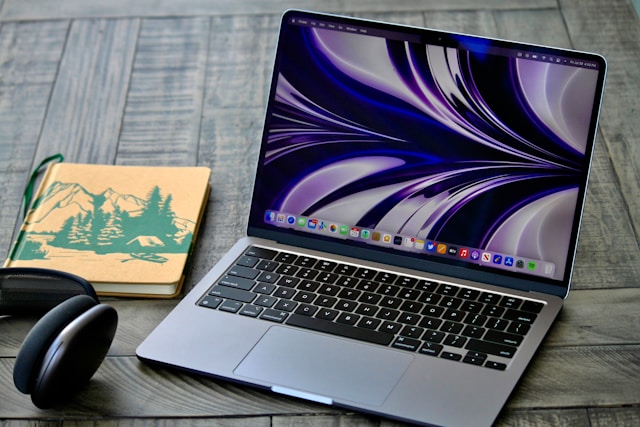
- Open About This Mac and click System Report.
- Choose Hardware in the left sidebar.
- Check the Chip or Processor Name field for the exact model identifier.
This method gives you more detail than the simple overview. For example, it helps when you fill out support tickets, verify warranty, or compare exact models during a purchase. In addition, System Report is useful when you manage multiple Macs and need precise hardware information.
Method 3: Use Terminal (Advanced)
If you prefer the command line, you can check the architecture with a single command.
uname -marm64= Apple’s M-series architecture (Apple Silicon)x86_64= Intel architecture
This command is fast, scriptable, and works well for remote support or SSH sessions. For example, IT admins can run it on multiple machines and log the result. Therefore, it is ideal when you automate inventory or provisioning tasks.
Apple Silicon vs Intel: Key Differences
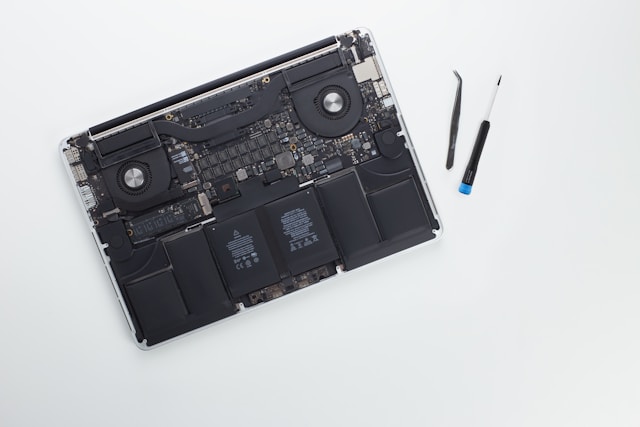
- Performance and battery: M-series chips deliver strong performance per watt and usually much longer battery life.
- Compatibility: Intel models run legacy x86 software natively, while Apple Silicon runs many Intel apps through Rosetta 2; native ARM builds remain the fastest.
- Virtualization: On Apple Silicon, you typically use Windows 11 ARM (for example, via Parallels). Traditional x86 Windows VMs are not supported natively.
- Security: Apple Silicon integrates additional security features at the silicon level, which strengthens protection against low-level attacks.
Apple Silicon vs Intel: Model Tips (At a Glance)
In practice, you can often guess the side of the Apple Silicon vs Intel divide by model year. MacBook Air models from late-2020 and later, and all MacBooks with an “M” chip label, use Apple Silicon. Macs from 2019 and earlier are almost always Intel, especially if they never mentioned M-series branding. When in doubt, always confirm using one of the methods above instead of guessing only from the chassis.
These checks are also useful when buying a used Mac. For example, you can quickly verify the architecture before paying, so you avoid surprise compatibility issues with your apps and tools.
Apple Silicon vs Intel for Developers & IT Pros
Architecture has a direct impact on developer workflows. Docker images, Homebrew formulas, emulators, and build pipelines often ship different binaries for each platform. Therefore, you should always pick the correct release: ARM/Universal builds for Apple Silicon and Intel builds for older Macs. Otherwise, you can introduce subtle crashes, extra emulation overhead, or broken plugins.
From an IT perspective, tracking Apple Silicon vs Intel in your asset inventory is essential. It allows provisioning scripts to pull the right installers, VM images, and security tools. As your fleet slowly migrates to Apple Silicon, these labels prevent mis-configured devices and repeated troubleshooting.
FAQ: Apple Silicon vs Intel
Do I still need Rosetta on Apple Silicon?
Some Intel-only apps still require Rosetta 2. macOS prompts you to install it the first time you open an Intel-only application, so the process is straightforward.
Will Intel apps run slower on M-series Macs?
Many Intel apps perform well through Rosetta 2; however, native Universal or ARM-only apps are usually faster and more efficient. Whenever possible, prefer native builds for the best experience.
How do I check an app’s build type?
In Finder, select the app and choose Get Info. Under Kind you will see whether it is Intel, Apple, or Universal. This check is very helpful during migrations from Intel to Apple Silicon.
Can I virtualize Windows on Apple Silicon?
Yes. You can run Windows 11 ARM using tools such as Parallels. Classic x86 Windows images are not supported natively, so plan your VM strategy accordingly.
Is there a quick command-line way to check the CPU family?
Yes. Run uname -m. The result arm64 indicates Apple Silicon, while x86_64 indicates an Intel-based Mac.
External Resources
Conclusion
You can now quickly identify whether you have an Apple Silicon Mac or an Intel-based one and choose software accordingly. Use the GUI methods for the simplest check, System Report for full hardware details, or Terminal for a reliable command-line option. Because Apple Silicon continues to dominate new models, verifying your chip ensures the best performance and compatibility across your tools and workflows.
In short, understanding where you stand in the Apple Silicon vs Intel transition helps you pick the right apps, improve performance, and maintain system stability in 2025 and beyond.
Meta: Apple Silicon vs Intel – fast ways to check your Mac chip, learn whether you use Apple Silicon or Intel, and choose compatible apps in 2025.
